Road construction plays a critical role in the economic development of Latin America. Countries across the region are investing heavily in highways, rural access roads, mining transport routes, and urban mobility systems. As infrastructure projects expand into remote areas and diverse geographical environments, contractors increasingly require flexible and efficient equipment solutions. Among these solutions, the mobile asphalt plant has emerged as a key technology for improving productivity and reducing long-term project costs.
Compared with traditional stationary facilities, a mobile asphalt plant(planta de asfalto móvil) can be relocated easily, installed quickly, and adapted to changing construction schedules. This flexibility provides significant operational advantages for contractors working on multiple road projects across different locations. Over time, the ability to move asphalt production closer to job sites reduces transportation costs, increases paving efficiency, and improves overall project profitability.
As governments continue to upgrade national transportation networks, the role of mobile asphalt production equipment is becoming increasingly important. Whether supporting large highway construction programs or smaller municipal projects, the combination of mobility, efficiency, and cost control makes modern asphalt production equipment a valuable long-term investment for contractors throughout Latin America.
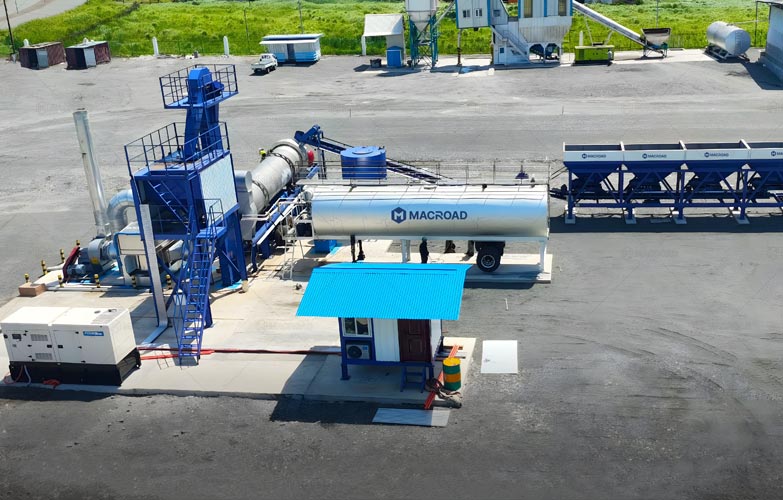
The Growing Demand for Asphalt Production in Latin America
Expanding Infrastructure Development
Latin American countries are experiencing steady growth in infrastructure development. National highway expansions, urban road rehabilitation programs, and cross-border logistics corridors all require reliable asphalt production capacity. In many cases, construction sites are located far from traditional industrial zones, making it difficult to rely solely on a stationary asphalt plant(planta asfáltica).
Transporting hot asphalt mixtures over long distances can significantly increase project costs and negatively affect mixture quality. For this reason, contractors increasingly rely on mobile solutions that allow asphalt production to take place closer to the paving site. This approach improves logistics efficiency and ensures that the asphalt mix maintains optimal temperature and workability.
Regional Examples of Project Demand
Countries such as Peru, Chile, Colombia, and Mexico continue to invest in major road modernization programs. For example, large mining regions and mountainous areas require specialized road construction solutions that can adapt to complex terrain. In these situations, deploying a mobile asphalt plant allows contractors to maintain consistent production even when project sites change frequently.
The increasing demand for flexible asphalt production systems has also encouraged contractors to evaluate compact equipment options such as the mini asphalt plant. These smaller plants are particularly useful for municipal road maintenance projects, rural infrastructure upgrades, and temporary construction sites.
Operational Advantages of Mobile Asphalt Plants
Reduced Transportation Costs
One of the most significant long-term advantages of a mobile asphalt plant is the reduction of material transportation costs. When asphalt is produced far from the construction site, transportation expenses can quickly become a major portion of the overall project budget. By relocating the asphalt plant closer to the paving area, contractors can shorten hauling distances and reduce fuel consumption.
This advantage becomes even more important in regions with difficult terrain or limited road access. Mountainous areas, mining corridors, and rural highways often require flexible asphalt production solutions that can adapt to changing site conditions.
Faster Project Execution
Another important benefit of mobile asphalt equipment is faster project deployment. Unlike traditional stationary plants that may require extensive civil construction and installation time, mobile systems can often be installed and commissioned within a short period. This allows contractors to begin asphalt production much sooner.
In large road construction projects, minimizing equipment setup time directly contributes to shorter project timelines. Faster deployment also allows contractors to respond quickly to new opportunities or urgent road repair needs.
Improved Asphalt Mix Quality
Producing asphalt closer to the paving location improves the consistency and workability of the asphalt mixture. When transportation distances are minimized, the asphalt retains its designed temperature and properties, which helps ensure better compaction and longer pavement life.
This quality advantage is particularly important for large highway surfaces, where consistent asphalt mixture performance directly affects road durability and maintenance cycles.
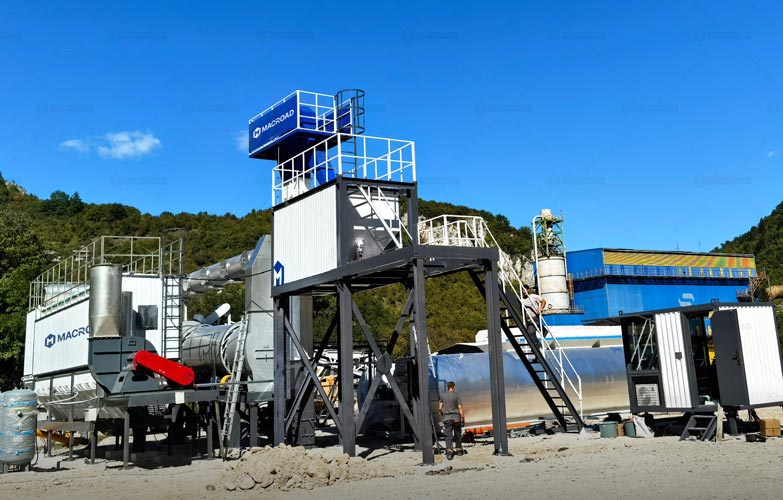
Applications of Mini Asphalt Plants in Local Projects
Ideal for Small and Medium Road Projects
The mini asphalt plant(mini planta de asfalto) has become increasingly popular in Latin America due to its compact design and efficient production capabilities. These plants are typically used for projects that require moderate asphalt output but still demand reliable and consistent mixing performance.
Municipal governments often use mini asphalt plants for road maintenance programs, residential street improvements, and small bridge access roads. Because these plants require less space and infrastructure, they can be installed quickly and operated economically.
Flexible Production for Remote Locations
Remote construction environments present unique challenges, including limited infrastructure, difficult terrain, and restricted access to materials. Mini asphalt plants help overcome these challenges by providing a portable and adaptable asphalt production solution.
In many cases, contractors combine mini plants with mobile crushing and screening equipment to create a localized aggregate and asphalt production system. This integrated approach improves resource efficiency and reduces the logistical complexity of road construction projects.
Case Insight: Asphalt Plant in Peru Road Construction
Infrastructure Development in Mountainous Regions
Peru provides an excellent example of how flexible asphalt production equipment supports infrastructure development. Many transportation routes in the country pass through mountainous terrain, mining regions, and remote rural communities. In these areas, installing a traditional stationary asphalt plant can be impractical.
Using a mobile asphalt plant allows contractors to move production facilities closer to project sites, ensuring continuous asphalt supply even in challenging locations. This mobility improves operational efficiency and allows construction teams to maintain consistent paving progress.
Supporting Regional Road Connectivity
Improved road networks play a vital role in connecting rural communities with economic centers. In Peru, investments in road infrastructure help support mining transportation, agricultural logistics, and regional trade. A well-positioned asphalt plant in Peru can significantly enhance the efficiency of these projects by providing reliable asphalt production near construction sites.
As road construction programs continue to expand, flexible equipment solutions will remain essential for maintaining consistent project performance across diverse geographic conditions.
Long-Term Investment Benefits for Contractors
Higher Equipment Utilization
Mobile asphalt plants offer a major advantage in terms of equipment utilization. Instead of remaining fixed at a single location, the plant can be relocated to serve multiple projects over its operational life. This flexibility allows contractors to maximize equipment usage and improve return on investment.
For companies involved in regional infrastructure programs, the ability to move asphalt production equipment between projects creates long-term operational efficiency.
Lower Infrastructure Requirements
Traditional asphalt plants often require extensive civil works, including foundations, material storage areas, and permanent utility connections. Mobile asphalt plants significantly reduce these requirements. Their modular structure allows them to operate with minimal site preparation.
This simplified installation process reduces both initial investment costs and long-term operational complexity.
Adaptability to Market Changes
Infrastructure development patterns in Latin America can shift depending on government policy, economic conditions, and regional development priorities. Contractors who invest in mobile asphalt production systems gain the ability to respond quickly to these changes.
Whether participating in national highway construction programs or smaller municipal projects, the adaptability of a mobile asphalt plant ensures that contractors remain competitive in a dynamic infrastructure market.
Conclusion
The rapid expansion of transportation infrastructure across Latin America is creating strong demand for flexible and efficient asphalt production solutions. Mobile asphalt plants provide significant operational advantages, including reduced transportation costs, faster project deployment, and improved asphalt mix quality.
In addition to large mobile systems, compact equipment such as the mini asphalt plant plays an important role in supporting smaller road construction and maintenance projects. Together, these technologies enable contractors to adapt to a wide range of construction environments and project scales.
Real-world applications, such as the growing use of asphalt plants in Peru(planta de asfalto en Perú), demonstrate how mobile production systems support infrastructure development in complex geographic conditions. By bringing asphalt production closer to project sites, contractors can improve productivity and maintain consistent paving performance.
Over the long term, investing in a mobile asphalt plant allows construction companies to maximize equipment utilization, reduce operational costs, and remain flexible in an evolving infrastructure market. As Latin America continues to expand and modernize its transportation networks, mobile asphalt production will remain a key driver of efficient and sustainable road construction.